A lot is happening with AI and music this year. It’s not just the technology that’s changing—the rules are changing too. Two things are coming at the same time: the music industry itself is going to start labeling AI use, and the EU is requiring platforms and creators to disclose AI-generated music. Below, we explain what this means for you as a creator.
Why is this happening now?
Let’s look at the numbers, because they show just how big this issue has become. At Deezer, as many as 44% of all newly uploaded tracks were fully AI-generated in April 2026. Apple Music said that more than a third of the tracks submitted to the platform are “100% AI.” Listeners often no longer know whether they’re listening to a real artist or a computer. That’s now starting to change.
The industry is taking the initiative
On July 13, 2026, major music organizations around the world—including IFPI, RIAA, The Grammys, and others—announced a new labeling system for tracks. It is not mandatory (yet), but the intention is for it to be adopted everywhere. There will be two labels:
“AI-Generated” — This label applies when AI has done the main creative work. For example, the vocals come from a computer, the main instrument was played by AI, or the entire song was created by AI based on a text prompt.
“AI-Assisted” — This label is for situations where you sang yourself and played the main instruments yourself, but used AI here and there to improve or supplement something.
Important: This label only concerns the audio itself. Four other things are therefore not taken into account (yet), even if they were created using AI:
- your lyrics (for example, written with a language model)
- the composition (the melody or chords created by AI)
- the music video
- the artwork for your cover
So, if you sang the vocals yourself and played the guitar yourself, but had AI write the lyrics, the label is still based on the audio itself, and the AI-generated lyrics do not change that.
The system has deliberately been designed to evolve alongside the technology, so it’s possible that lyrics, video, and artwork will be included in a later version. For now, they are not.
What does this mean for you?
If platforms eventually adopt this system—Spotify, Apple Music, Deezer, etc.—you’ll probably be asked a question when uploading your track: which label best applies to this track?
The legal requirement: Article 50 of the AI Act
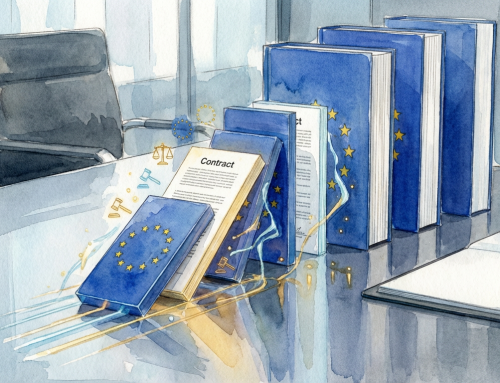
In addition to this voluntary industry label, the EU has introduced its own rule, and this one is mandatory. From August 2, 2026, AI-generated music must meet two requirements:
1. Invisible labeling
The AI tools that generate music (such as Suno, Udio, and similar systems) must mark their output in a way that allows computers to recognize that it was AI-generated. This is usually something embedded in the audio itself that people cannot hear, but machines can detect.
This is the responsibility of the AI tool, not you as the creator.
2. Disclosure when imitating a real person
If an AI-generated track imitates the voice of an existing, recognizable artist, this must be clearly disclosed to the listener. Think of an AI cover using the voice of a famous singer. You can’t do that without making it clear that the voice is AI-generated.
Important for existing tracks: Music that was created and released before August 2, 2026 does not have to be retroactively labeled.
Anyone who fails to comply with the law risks a substantial fine: up to €15 million or 3% of global annual turnover. In practice, this will primarily affect large AI companies and platforms rather than individual creators, but it does show how seriously the issue is being taken.
What can you do now?
- Be honest about your use of AI. If your distributor (such as DistroKid, TuneCore, or CD Baby) asks whether AI was used, answer honestly. This can prevent problems later, and fans appreciate transparency.
- Keep your project files. Did you sing and play everything yourself? Keep your session files, lyric versions, and recordings of your creative process. If a system ever incorrectly labels your track as “AI,” this can serve as evidence.
- Don’t use an AI-generated voice of a real artist without permission. This won’t just be subject to disclosure requirements; it could also create separate legal problems.
- Stay up to date. Both the industry labeling system and the legal rules will continue to be developed over the coming months. What is already certain is that August 2, 2026 is the date the law comes into effect.